Speaker Race Getting Crowded While Many Members Playing "Wait and See" Before Taking Sides
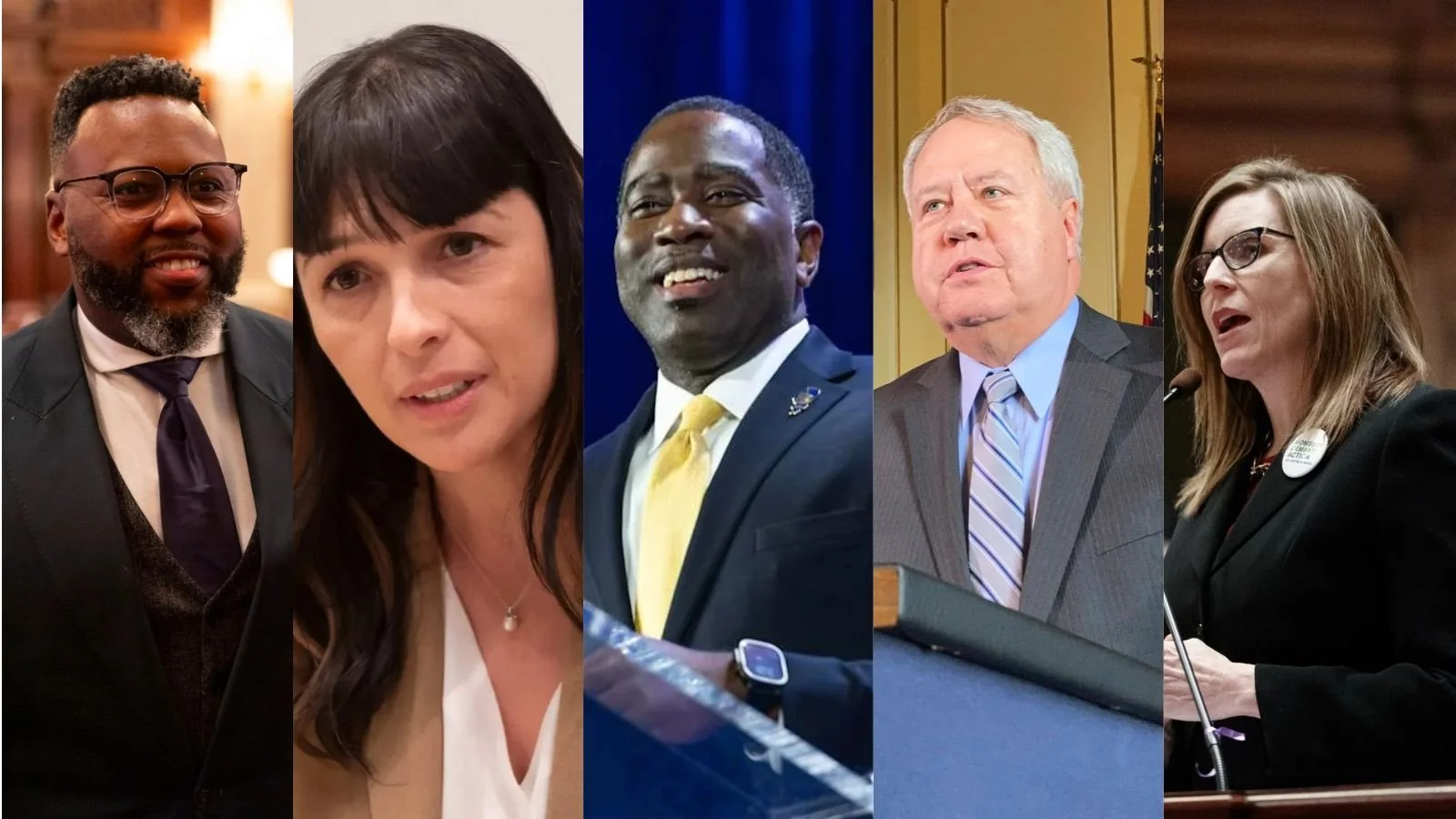
Rep. Kam Buckner (D-Chicago), Rep. Eva-Dina Delgado (D-Chicago), Rep. Marcus Evans (D-Chicago), Rep. Jay Hoffman (D-Swansea), and Rep. Ann Williams (D-Chicago), who are all running for Speaker of the House.
Both Reps. Eva-Dina Delgado (D-Chicago) and Ann Williams (D-Chicago) on Thursday formally jumped into the quickly growing field of candidates to replace Chris Welch as Speaker of the House.
We had reported on Delgado’s efforts to secure the 60 votes she needed to become Speaker and Williams’ interest had been widely rumored in political circles in recent days.
Sources said Reps. Jay Hoffman (D-Swansea), Marcus Evans (D-Chicago), and Will Davis (D-Homewood) have also formally submitted their names for consideration. Rep. Kam Buckner (D-Chicago) formally confirmed his candidacy last week.
In a statement, Delgado said she was ready for the job.
“When you’re putting together a state budget or negotiating big legislation, people come to the table with different priorities and good reasons for them,” she said. “A good leader listens, makes tough calls, and is honest about the path forward. That’s how I’ve earned my colleagues’ trust, and it’s how I would lead the House.”
Williams confirmed to The Illinoize yesterday afternoon she was planning to seek the Speaker’s gavel. In a statement later in the day, she claimed she could bring the largest legislative caucus since the Cutback Amendment in 1982 together.
“I have a proven ability to work with members across the political spectrum of our diverse caucus,” Williams said.
Meanwhile, Buckner on Thursday sent House Democratic members an agenda of 15 policy proposals he would implement as Speaker.
The list included sexual harassment reforms, referred to as creating a “safe, professional workplace,” would end the “arbitrary” removal of a member from the caucus, like the actions Welch has taken against Rep. Fred Crespo (D-Hoffman Estates), ending the controversial 60-vote rule Welch installed requiring 60 Democratic votes to move any bill to a vote, and to make House action more efficient through a “predictable” start and end time for floor action and to reinstall a consent calendar in the House.
“The past several months have been hard on our caucus and the institution we serve,” Buckner wrote in his letter to the caucus. “I have seen up close where this House works well and where it has failed our staff and the members who come here to serve their constituents. That’s why I believe the Speaker’s first job is not to accumulate power, but to share it.”
So, who is the favorite for the position? That appears hard to tell.
In conversations with many House Democrats Thursday, most said they are interested in how the process plays out and weren’t committing to a candidate yet.
“I’m honestly excited to see how it will play out,” said one member.
“Waiting to see what direction they each want to take,” said another.
“I think most members are taking their time to hear all the candidates out,” said a third.
“It’s early and the first phase and coming to terms with a competitive Speaker race is where most members are at,” said another Democrat. “I think the picture of the actual contenders will be a bit more clear by the second week of veto [session.] But it could take a bit longer than that.”
Many Democrats believe the race will bleed into January, potentially close to when the new General Assembly is sworn in January 13.
When asked who the favorites in the race are, most members we spoke to said they believed Delgado, Buckner, or Hoffman had the best chance to take the Speaker’s gavel.
“Ask me the same question next week and you may get a different answer,” laughed one Democratic member.

