Are Dems Facing Civil War Over State Budget?
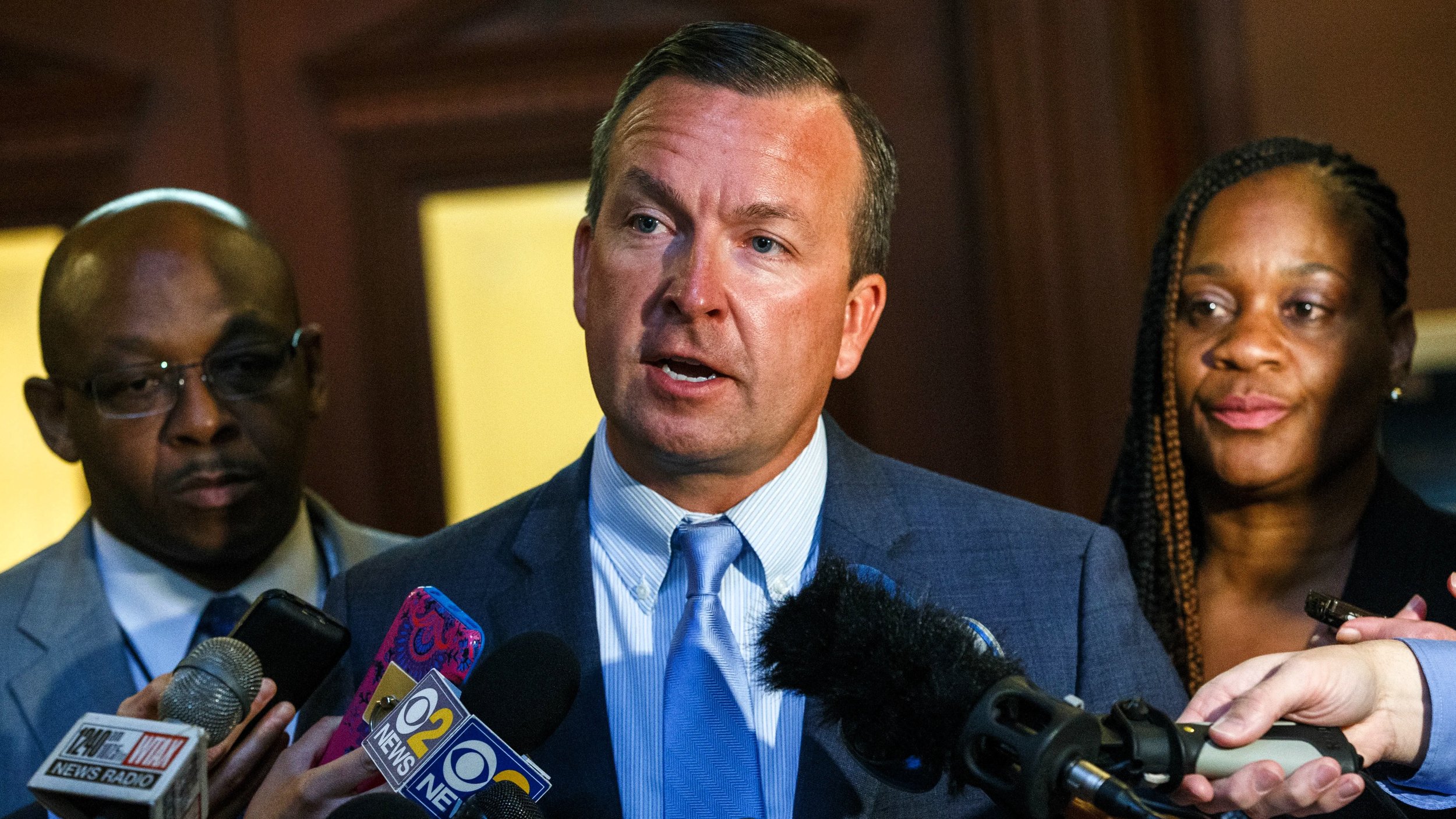
Deputy Gov. Andy Manar speaking to reporters in 2017 while he served in the state senate. (Photo: State Journal-Register)
After new revenue forecasts from the Governor’s Office of Management and Budget (GOMB) and the legislative Commission on Government Forecasting and Accountability (COGFA) added a layer of pessimism about the upcoming fiscal year, simmering tensions between Democratic leaders and progressives could bubble to the surface.
Both GOMB and COGFA revised revenue projections down for the current year and Fiscal Year 2027, which begins July 1.
The estimates were reduced by less than 1%, which could impact the slightly increased spending levels in Governor JB Pritzker’s introduced budget.
Deputy Governor for Budget and Economy Andy Manar, a former downstate State Senator, said in a statement the estimates show declining confidence in the economy.
“The updated forecast further underscores the State’s need to remain focused on fiscal discipline as the entire country is forced to continue to grapple with economic and geopolitical uncertainty that the Trump Administration is creating,” he said. “The latest estimates shows that our ability to increase spending beyond the Governor’s introduced levels is limited.”
But legislative progressives, who have long called for more revenue to increase funding for schools and social services, objected to Manar’s framing of the state’s spending plan.
Members of the Progressive Affordability and Tax Justice Coalition (ATJC), a group of progressive lawmakers in the House and Senate, said in a statement
“With state spending on core services already down in real terms, plus deep cuts to food assistance, Medicaid, and more coming from the Trump Administration, the General Assembly cannot simply muddle along for another year and wait for our financial situation to deteriorate while our constituents need support,” the group said. “Flat gross revenue is not sustainable when inflation keeps eroding what each dollar can actually buy for households, social service organizations and local governments.”
Progressives have asked for more revenue through “closing corporate loopholes,” enacting a digital advertising tax, and other proposals that would increase taxes on corporations, millionaires, and billionaires.
Some Democrats privately fear the House and Senate Democratic caucuses will be deeply at odds over a final spending level in the new state budget, which could complicate passing a budget by the May 31 deadline.
But, Rep. Kam Buckner (D-Chicago), one of the House budget negotiators, or budgeteers, told me on the radio the division inside his caucus isn’t as serious as some have projected.
“I think we’re we’re actually more aligned than folks may think,” Buckner said. “We’ve got to be honest about where we are as a state from a financial standpoint. We’ve done a lot of smart things, a lot of hard things that have made the picture a little better than it may have been if we would not have made those disciplined decisions. People are supposed to come with their ideas. I’m glad that the progressive members of the General Assembly, who have specific ideas on spending, are also coming with specific ideas on revenue. I think that’s a healthy part of the process.”
Buckner did not rule out new revenue or spending programs proposed by progressives, though, we’re told, the Governor’s office has pushed back on major tax increases in an election year.

