
Health Care Separates 9th Congressional District Hopefuls
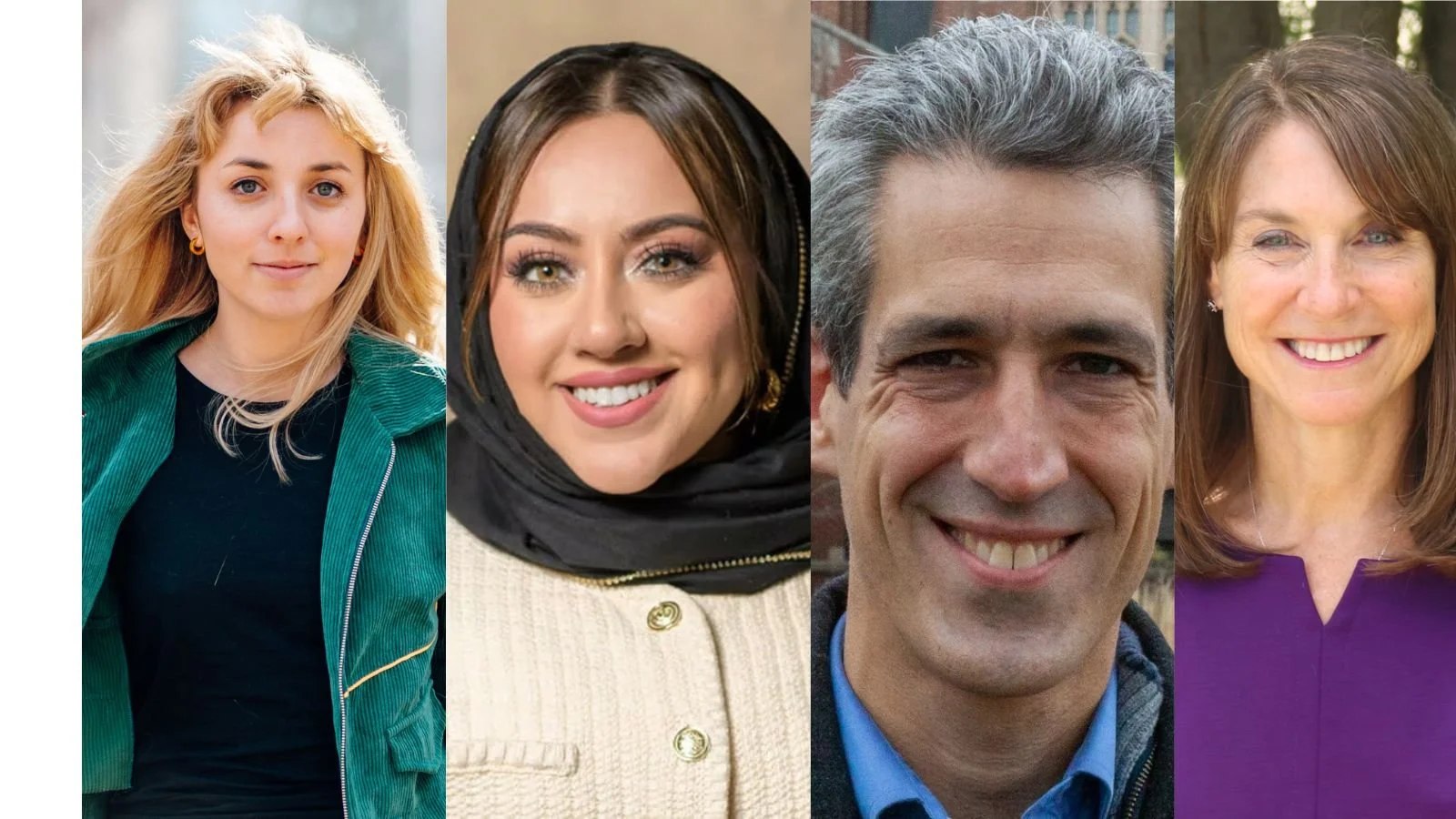
A group of Democratic 9th District congressional candidates, Kat Abughazaleh, Skokie School Board member Bushra Amiwala, Evanston Mayor Daniel Biss, and Sen. Laura Fine (D-Glenview).
In the crowded Democratic primary for Illinois’ 9th Congressional District seat, it can be difficult to parse where the candidates differ on their approach to health care policy.
Several progressive candidates have declared their support for a Medicare for All plan and criticized the expiration of Affordable Care Act subsidies, the enhanced premium tax credits designed to lower costs for those enrolling in the ACA marketplace. Congress allowed those tax credits to expire at the end of last year, which the Kaiser Family Foundation estimates could double premium payments for ACA enrollees.
The Illinoize spoke about health care policy with three leading candidates: Sen. Laura Fine (D-Glenview), Skokie School Board member Bushra Amiwala, and Kat Abughazaleh. Evanston Mayor Daniel Biss, who did not make himself available for an interview, emailed responses to our questions.
It’s worth noting that the two Gen Z candidates, Amiwala and Abughazaleh, have taken an unusual approach to their own health care coverage. At the start of her campaign, Abughazaleh had stated she had no health insurance and was “using GoodRx like my life depends on it.” She has since enrolled in her partner’s employee plan.
Similarly, Amiwala lost her employer’s insurance when she quit her job to run for Congress. She’s now among the millions of Americans without healthcare coverage but has found a workaround. Like Abughazaleh, she also uses GoodRx to pay for existing medication at a discounted rate.
“The reason I was able to do it is because we have a lot of clinics in our community that have an uninsured rate, and I found that that uninsured rate at that clinic was cheaper than my co-pay was with insurance,” she said.
The four candidates all support some version of a Medicare for All plan. Biss, who was endorsed by Washington Congresswoman Pramila Jayapal, expressed a willingness to work with the progressive Democrat on her bill that would establish a national health insurance program administered through the Department of Health and Human Services. The legislation would eliminate premiums, co-pays and deductibles. Private insurers and employers would only be able to offer supplemental coverage. Under the plan, Medicare would expand to include dental, hearing, and vision care.
The Inflation Reduction Act of 2022 already took some steps to lower prescription drug costs for those with Medicare, including capping out-of-pocket spending for Medicare Part D enrollees and gave the government power to negotiate prices for certain drugs. Biss has proposed expanding the IRA’s caps on out-of-pocket costs, something Democrats had no chance of achieving last year but could take another crack at if they flip the House.
Though Abughazaleh argued that current Medicare for All proposals in Congress were not sufficient, her own vision hewed closely to the provisions outlined in Jayapal’s bill.
“While I support current Medicare for All proposals, I do worry about other members of Congress using it as an excuse with the existing Medicare apparatus as its basis, and I don’t think that goes far enough,” Abughazaleh said. “We need inclusive vision, dental, mental and hearing coverage. When it comes to a single payer healthcare system, we need to ensure that there is inclusion for people with disabilities and that people aren’t paying premiums. We need a system like what we see overseas.”
Abughazaleh proposed funding a Medicare for All model by increasing income taxes for millionaires and taxing unrealized gains or “paper profits.”
“We also need to take away these tax cuts that Trump has instituted for billionaires and for the ultra wealthy,” she said.
Amiwala described a self-sustaining model that would redistribute funds that are currently paid into private insurance.
Unlike her peers, Fine took a more incremental approach toward healthcare reform. Rather than tackling Medicare for All on day one, she planned to first focus on bringing back the ACA subsidies.
“I think Medicare for All would allow us to have health care as a human right, not as a privilege, because then health care would be available to everyone,” Fine said. “I think though, in my personal opinion, we can’t pull the rug out from everybody until we’re able to make those steps to get it done.”
Abughazaleh, while characterized as one of the more radical left-leaning candidates, acknowledged that passing a single payer health care system would be unlikely under the Trump administration and the current Supreme Court. Like Fine, she saw fertile ground to work with Republicans on restoring ACA subsidies “or at least not cut them further.”
Amiwala took her campaign for the single payer system a step further by pushing progressives to primary Democrats who thwart Medicare for All. She added that Democrats should demand a floor vote on Medicare for All to see where each member of the party stands on the issue.
“It also means that if people are taking money from private insurance or Big Pharma to get elected, there is no common ground talking point. We need to ensure those people are primaried, challenged and out of the House,” she said. “That type of interest that they are beholden to is actually the only reason why they are not in favor of this process. It doesn’t have to do with the right or wrong talking point.”
But progressive Democrats have not always been in lockstep when it comes to health care policy. Last year, the State of Illinois eliminated the Health Benefits for Immigrant Adults program, which provided Medicaid-style health care coverage to low-income noncitizens between the ages of 42 and 64, after an audit had found that HBIA and the Health Benefits for Immigrant Seniors had cost the state $1.6 billion. The cuts were included in the state budget signed last June by Gov. JB Pritzker, who acknowledged that the program’s costs had grown too much. Fine, in the State Senate, voted for that budget.
“It was unfortunate that we had to eliminate the program, we just couldn’t afford it,” said Fine. “In my perspective, I think it was a lot more expensive than we thought it was going to be. And right now, not just Illinois, but every state is going to be facing really tough budget times, which means we have to make really, really hard decisions.”
Amiwala attacked Fine directly for that vote, pointing out that the $1.6 billion cost was dwarfed by the nearly $97 billion that undocumented immigrants contributed in taxes. That’s not an apples to apples comparison though, given the $97 billion figure accounts for federal, state and local taxes in 2022, according to a report from the Institute on Taxation and Economic Policy.
The question of whether to cover healthcare regardless of citizenship status has become a lightning rod in the 9th District race. Last June, conservative pundit Scott Jennings pounced on Abughazaleh during a CNN panel when he asked whether she believed “illegal aliens” should receive Medicaid.
“Health care shouldn’t be reliant on your citizenship status,” Abughazaleh later told the Illinoize.
Amiwala and Biss also supported providing healthcare for people regardless of citizenship. Fine danced around the question before finally answering yes.
Sen. Mike Simmons (D-Chicago), and Rep. Hoan Huynh (D-Chicago) are among 15 Democrats seeking the Democratic nomination to replace the retiring Congresswoman Jan Schakowsky (D-Evanston).