
Harmon and Welch Appear Split on Millionaire's Tax
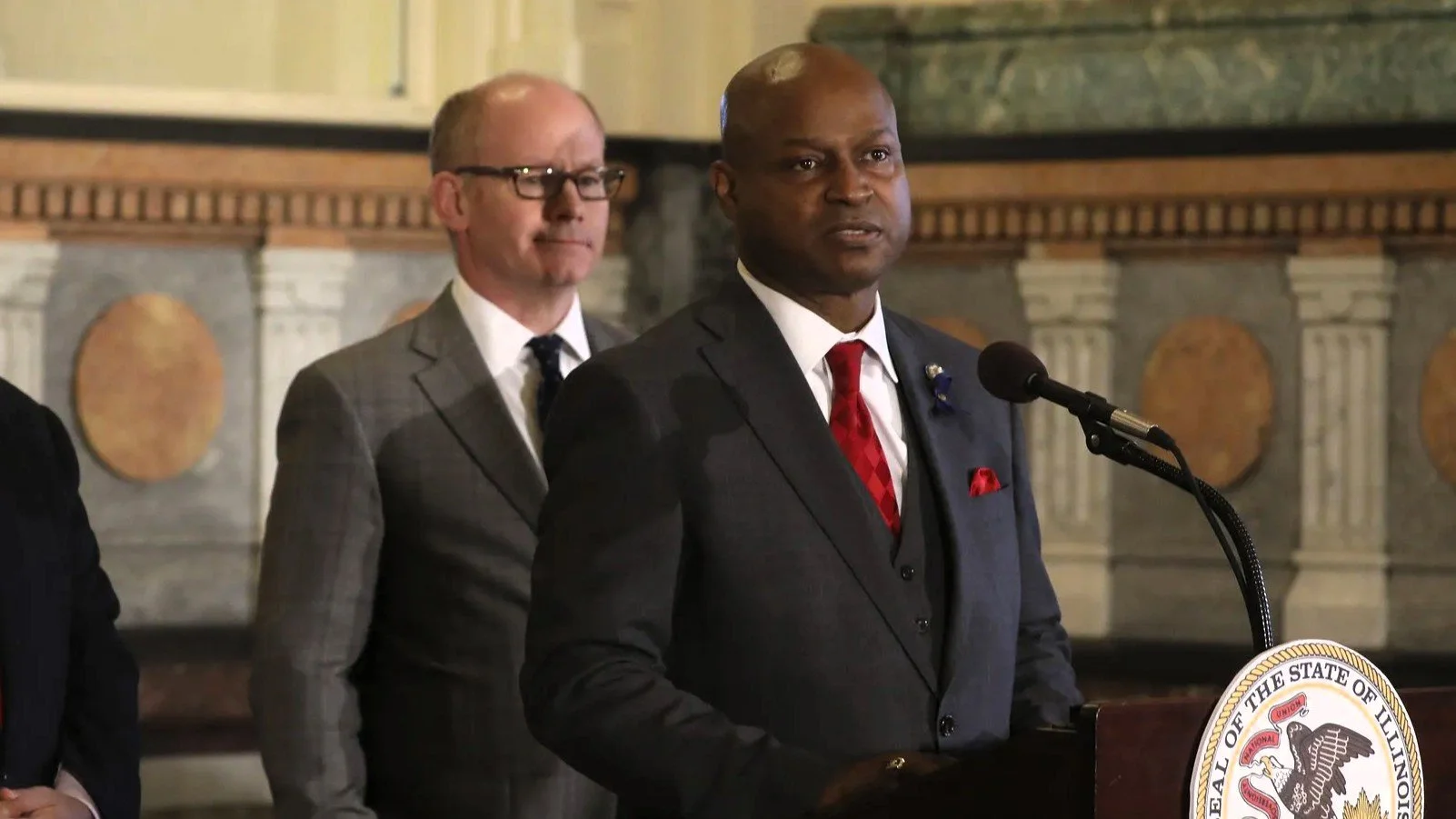
House Speaker Chris Welch and Senate President Don Harmon at a news conference in Springfield in 2022. (Photo: Chicago Tribune)
If lawmakers are going to put a referendum on the November ballot asking voters to approve a constitutional amendment to increase taxes, either through a graduated income tax or through a “surcharge” on incomes over $1 million, they’ll have to get it done by May 3.
But, it appears House Speaker Chris Welch and Senate President Don Harmon are split on the issue.
Welch has been an open advocate for the “millionaire’s tax,” which he repeated Thursday when asked by reporters.
“I’m a big supporter of taxing income over a million [dollars per year,]” Welch said. “I’ve said that pretty much since I’ve been in the legislature and definitely for the last year. But there’s different opinions on what you would do with it and there’s different opinions on what the rate should be.”
Democrats appear divided on where additional revenue should go, whether it be property tax relief, additional funding for schools, or to establish new programs.
“There are a lot of conversations around that issue,” Welch said. “And one of the things I’ve learned in this business is you need consensus to build coalitions to get anything done.”
But Senate President Don Harmon was much less optimistic about putting a tax increase question on the ballot.
“I’ve always supported a more fair tax policy. I led the charge on prior constitutional amendments,” Harmon said. “The message was very clear to me after the last effort that voters weren’t quite ready for that. So we’re gonna have to do some serious evaluation before advancing anything right now. But, I’m certainly open to the conversation.”
Gov. JB Pritzker hasn’t gotten behind either potential tax change, either, after putting $50 million behind the failed graduated tax question in 2020.
Lawmakers essentially have two weeks remaining to get the question on the ballot. The House is in session next week, but not the week of the 27th. The Senate is out next week, but in session the week of the 27th, so they each have, essentially, one week to pass the resolution.

