
Cunningham on Bears: "They've Been Frustrating to Deal With"
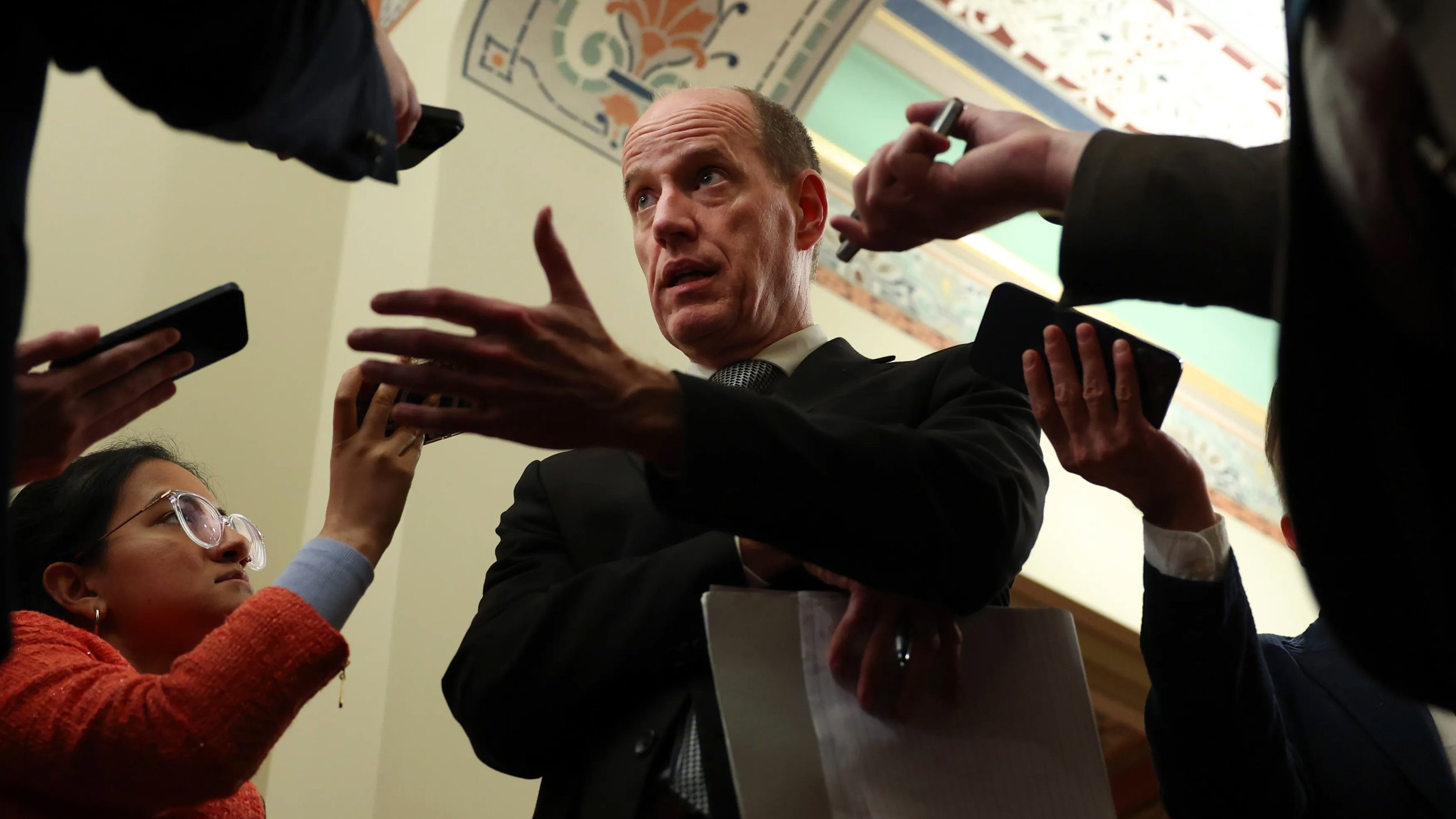
Sen. Bill Cunningham (D-Chicago) speaks with reporters at the Statehouse early Monday morning. (Photo: Chicago Tribune)
The Chicago Bears stadium saga sucked all the air out of the Statehouse this spring, but lawmakers still weren’t able to get a final product through both chambers before the General Assembly adjourned early Monday. It’s all with a $1 billion offer from Indiana hanging over the heads of Illinois’ efforts.
Now what?
Sen. Bill Cunningham (D-Chicago) confirmed Tuesday there are trust issues between the Bears and members of the General Assembly, but he’s still optimistic a deal can be reached.
Cunningham appeared with me on the radio for a long conversation Tuesday.
The House passed its Bears/Megaprojects bill in late April, and while it was made clear publicly the Senate had issues with the legislation, we didn’t know until late Saturday night the megaprojects idea was dead.
What took so long?
“We presented it to our caucus, talked it over, and I would say then it sort of got caught up in the normal busyness that comes about the last week of session, which made it even more difficult to move forward and where we found ourselves as a Senate Democratic caucus,” Cunningham said. “As President [Don] Harmon said, we found ourself in a position where the majority of our caucus wanted to do nothing as of early last week, but we didn’t think that was a great idea.”
Cunningham told reporters late Saturday night, some 26 hours before the scheduled adjournment of the spring session, that there were no options on the table Senate Democrats could support. That started a mad scramble that eventually ended in the municipal stadium authority legislation that passed the Senate early Monday but didn’t get called in the House.
Cunningham said the idea didn’t come out of thin air.
“It’s something that crossed my mind a couple of weeks ago, but we were really concentrating on trying to find some form of the House bill that could work, something that we could push across. It became clear though early in the week, well before Saturday, that the votes just weren’t there for it,” he said. “So, later in the week we pitched the idea to the caucus, they said they were open to it, so then we gave our staff a rather daunting task, and that was to write up a bill that contained the language for this approach and that’s what they did. Regrettably, it was not ready to file until late.”
One of the most surprising revelations of the final hours of the debate was the revelation that Senators from the city of Chicago had been led to believe the city was still in contention for the Bears stadium, which the team had denied repeatedly in recent weeks.
“One of the things I think the Bears were beginning to successfully argue to legislators is that they had a binary choice in front of them between Arlington Heights and Hammond and that, at the end of the day, the state would obviously be better off if the Bears moved to Arlington Heights,” Cunningham said. “That effort was completely undermined when the information began to leak a couple of weeks ago that the Bears had in fact remained in touch with the city of Chicago talking about a lakefront stadium. Word of that began to circulate. Some of us reached out to various sources with city government, I would say sources that are not part of Brandon Johnson’s inner circle politically, and they confirmed for us that those discussions did in fact take place. Once that sort of binary choice was no longer on the table, the Arlington Heights proposal just became less viable, and that all happened after the House passed their bill. We learned about that, and so that really changed the dynamic in the Senate after the House bill passed.”
Cunningham also confirmed frustrations we’ve heard from Democrats about the way the Bears have lobbied the legislature on the issue and the lack of engagement from Bears owner George McCaskey or team President Kevin Warren, neither of which who were in Springfield attempting to get the bill across the finish line.
“The Bears have made a lot of mistakes throughout this process. They’ve been frustrating to deal with,” Cunningham said. “You talked about George McCaskey not being there and Kevin Warren not being there. That is part and parcel of a bigger problem. I always got the sense in dealing with the Bears that they expected a Jim Thompson like figure to emerge and lift the Bears up on his shoulders and carry them across the finish line. That someone else was going to make this happen for them. I think they thought they were dealing with 1988 Springfield when the White Sox passed their stadium deal, or even the year 2000 Springfield when Mayor Daley and George Ryan passed the bill to renovate Soldier Field. That Springfield doesn’t exist anymore. This is not the top down legislature we had back then where the leaders say, ‘let’s vote for this,’ and everyone lines up and does it. This is a much more of a bottom up legislature.”
So the House has passed a bill and the Senate has passed a bill that the other chamber hasn’t passed. House Speaker Chris Welch indicated Monday he believed a deal could be reached, but Cunningham says it won’t be easy.
“No one’s going to call us back to Springfield unless there’s an agreement in place. We don’t have that right now. That’s first and foremost. Secondly, I think in order to call the legislature back into session, you have to make a case. You have to build support among rank and file legislators to come back to town. Although this obviously generates so much attention from the media and the general public, I think legislators are focused on much bigger problems,” Cunningham said. I mean, they’re hearing from their constituents about their own property taxes, not the Bears property taxes. They’re hearing about the cost of gas and other costs of living issues, and they’re concerned about Medicaid cuts. Those are really the primary concerns of legislators. I think if they return to Springfield, they’d rather deal with those issues than a stadium issue. So I never say never, but I would say a special session would be unlikely.”

