
Bears Stadium Bill "Close" to Finalized Ahead of Veto Session
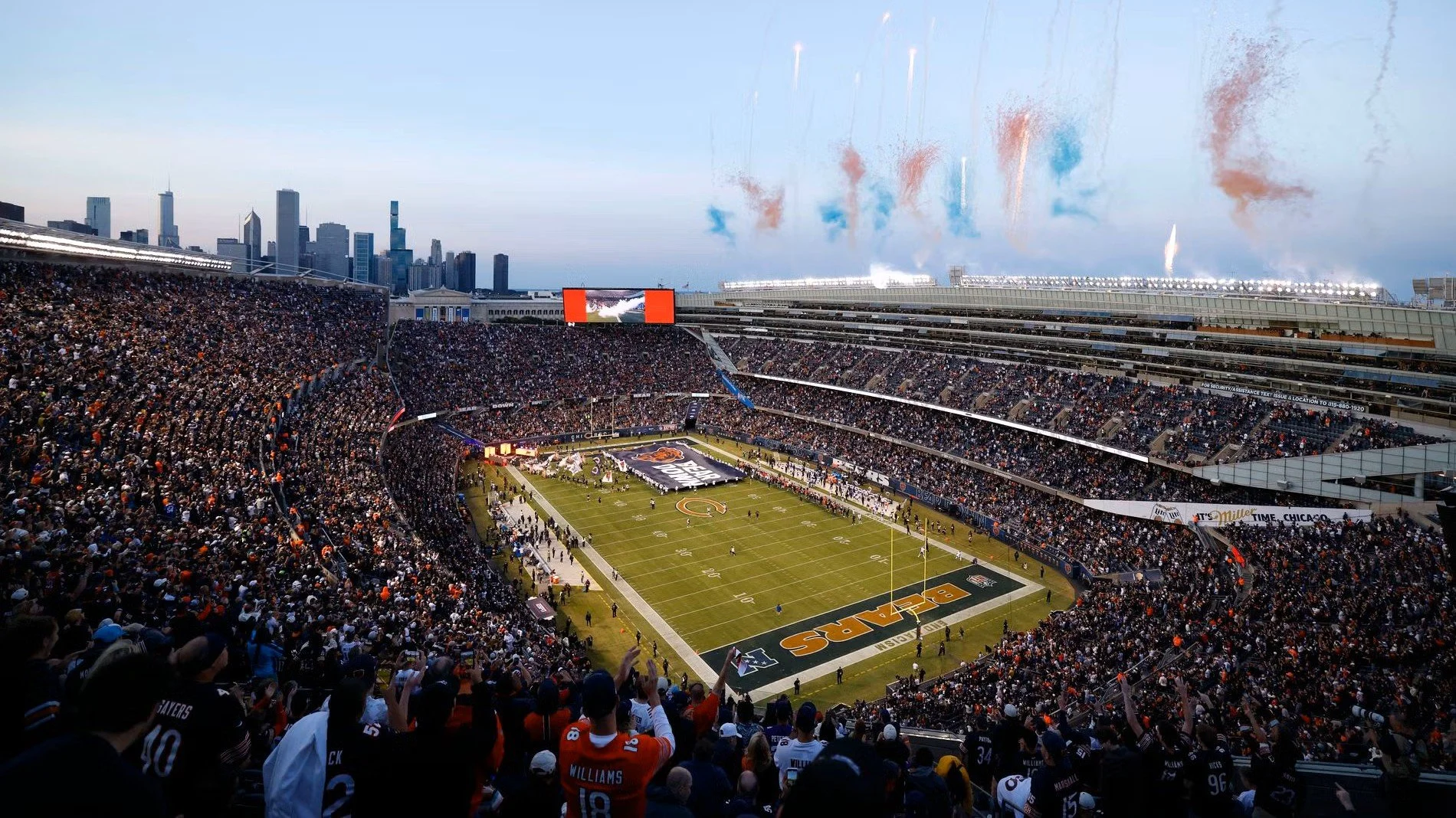
Soldier Field in Chicago. (Photo: Getty Images)
Negotiators attempting to finalize legislation to keep the Chicago Bears in Illinois are aiming for passage during the fall veto session, but no agreement has been struck yet as lawmakers prepare to return to Springfield next week.
“It’s being worked out. I think [it’s] pretty close,” said a source with knowledge of the negotiations. “[It’s] close, but now [it’s just] working out in some of the specifics.”
“Hopefully during the veto session, [we can] present some proposals to legislators and see if there’s support in both chambers to move forward,” said Sen. Bill Cunningham (D-Chicago), the Senate sponsor of the Bears legislation. “Close doesn’t count until there’s support in the legislature. So, whatever sort of understanding is reached at the negotiation table is gonna have to be presented to members of both chambers and [we’ll'] see if there’s a level of comfort with whatever those agreements are if there are enough votes to move forward.”
The House passed legislation in late May to give the Bears a property tax break through the so-called “Payment in Lieu of Taxes,” or PILOT, legislation, but the bill did not have support in the Senate.
Senators passed their own legislation in the early hours of June 1 to create a municipal stadium authority, allowing either Arlington Heights or Chicago to own the stadium the team builds, eliminating their property tax bill entirely. It’s a model used by most NFL stadium sites, we’re told.
Both Cunningham and other sources with knowledge of the negotiations say the any final municipal stadium authority legislation will require the Bears to choose between Arlington Heights and Chicago, where multiple proposals continue to pop up in an attempt to keep the team in the city.
One of the hardwired aspects of any sort of bill will be that it is a location neutral and franchise neutral proposal, one that any qualifying municipality can use and any professional sports franchise can use,” Cunningham said.
Sources say language has been shared with both Chicago and Arlington Heights to make sure the authority model is workable for both municipalities, saying Chicago has to be a real option for the Bears if they plan to get the votes they need to pass the bill.
“We have to make sure that it’s workable for both of them and that the Chicago option is not just smoke and mirrors,” the source said.
That language would force the Bears into a potentially uncomfortable choice between the city or suburbs.
“I think they understand that this is the only way something is going to move forward in the General Assembly,” Cunningham said.
“We wouldn’t tell Rivian that they need to go to Champaign and not Bloomington, right? [The state] would set the course for them they’ve gotta be the site selectors,” the source said. “The Bears have, up until this point, have been really reticent to give any feedback on where they were and what they wanted. But the good thing about the league being in the room is that the Bears have had to be responsive. That helps a lot.”
All sides have praised the involvement of NFL commissioner Roger Goodell, one of the most powerful people in sports, for taking the rare step of personally taking a major part in negotiations.
“Nobody wants to be the Governor or the state representative or the state senator or the Speaker or the [Senate] President who loses the Bears or the ownership group that takes the Bears to Indiana,” the source said. “Nobody wants to be the commissioner that presides over the Bears leaving. I think he takes that seriously.”
But passing the legislation, when finalized, still doesn’t appear to be a slam dunk in the General Assembly.
“There was a hard line against the PILOT bill [among Senate Democrats],” said Cunningham. “[They felt it was an] initiative to further break an already broken property tax system, and we shouldn’t do that. I thought that sort of captured the mindset of a lot of senators. That’s how we ended up with the bill we ended up with. It’s no accident that it is the exact approach that all but three NFL stadiums follow.”
But there are concern progressives, who have been antagonistic to the Bears in the statehouse, will go along with legislation to eliminate the organization’s property tax burden entirely.
There is also concern the authority bill will be harder to pass in the House than the PILOT bill.
Rep. Kam Buckner (D-Chicago), the House sponsor of the Bears legislation, did not respond to a request for comment. The Governor’s office referred us to comments Pritzker made about the negotiations November 6.
“We want to make sure the legislation is ready for people to look at and maybe have some hearings on that first week [of veto session], and hopefully get voted on during the second week of veto,” Pritzker said.
Both House and Senate sources say caucuses will likely get input on the legislation next week during the first week of veto session. Officials are aiming for a vote on the bill the second week of veto session, which begins December 1.
“I think we’re on track,” a source said.

