Is AFL-CIO Endorsement Delay a Sign Democrats Are Losing Their Grasp on Unions?
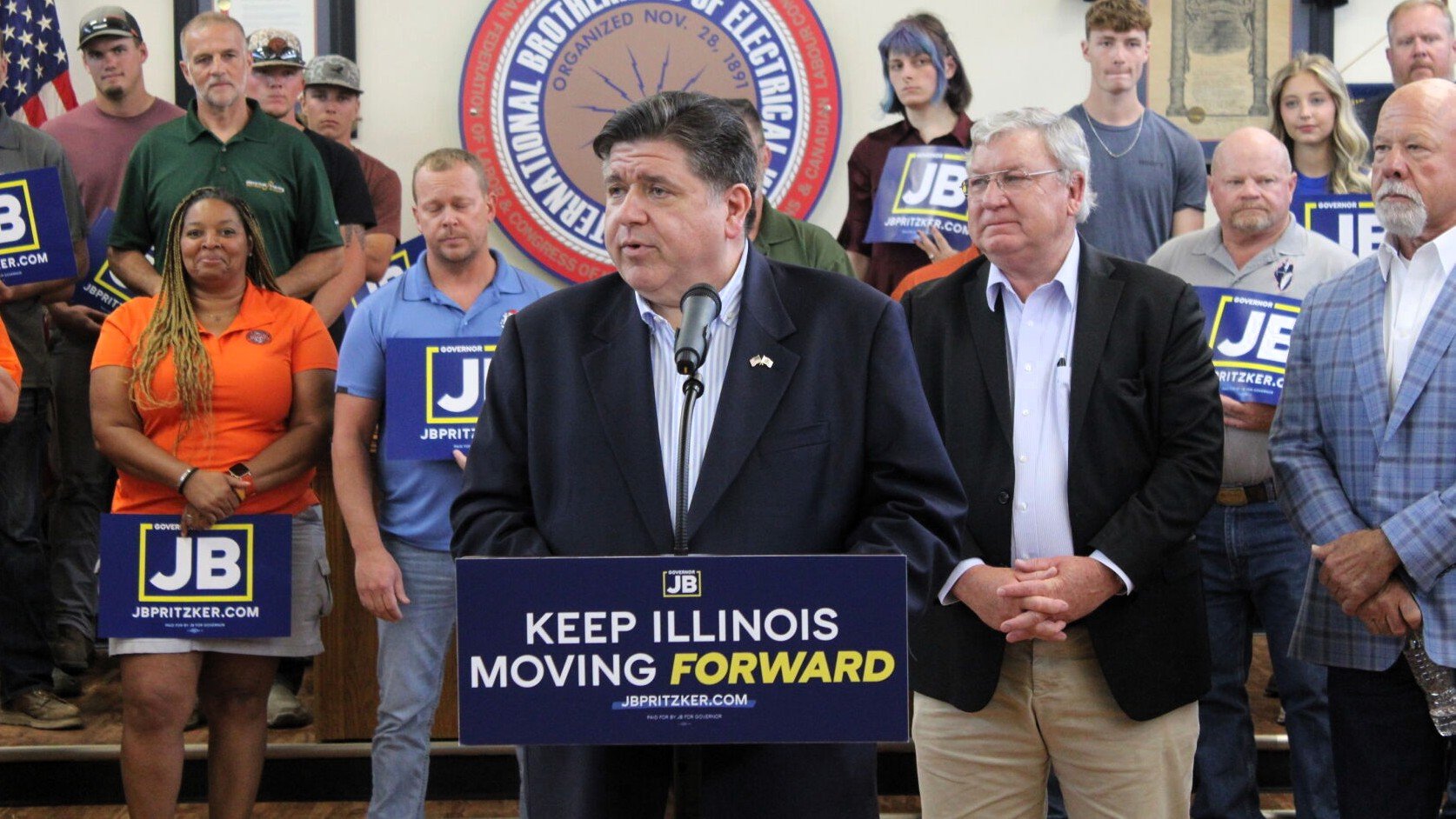
Governor JB Pritzker and Illinois AFL-CIO President Tim Drea campaign together in West Frankfort after Pritzker announced his re-election campaign last year. (Photo: The Southern Illinoisan)
After the Illinois AFL-CIO, one of the state’s most influential labor unions, announced this week it was “deferring” its endorsements for the November election citing frustration with Democrats they usually favor, many Democrats we speak to are divided on how to respond.
In a statement from Illinois AFL-CIO President Tim Drea, the union claimed the Democratic super majority isn’t doing enough to address union concerns.
“Over the past year, Illinois AFL-CIO affiliates and union members from across Illinois consistently voiced frustrations about the lack of progress around our core legislative priorities,” he wrote. “This past state legislative session was especially concerning, as Springfield not only failed to advance key priorities, but the process by which legislation was considered fell short of what working people deserve. These concerns span the full breadth of our movement, with public sector, private sector, manufacturing, and building trades all expressing dissatisfaction.”
In multiple conversations with lawmakers, strategists, and observers, Democrats appear split on what the AFL-CIO statement means for Democrats’ ongoing relationship with labor.
“If our friends in labor help elect us, they have every right to expect us to be friendly to their agenda,” one lawmaker said on the condition of anonymity. “Why would they just keep forking over checks if we don’t?”
Former Rep. Mike Zalewski told me on the radio yesterday labor’s frustration come with a new power dynamic at the statehouse.
“Labor probably has a frustration that, in eras past, they could come to Springfield, ask for a certain priority list, and have a reasonable expectation that the priority was acted upon. They are surprised when that does not occur,” Zalewski said. “It’s clear that this is a very bottom up General Assembly right now, where the power comes from the bottom. The Speaker wants members to feel empowered to govern from the bottom up. It surprises people, to a degree, when expectations aren’t met.
The Pritzker campaign, which doesn’t take money from unions, doesn’t appear concerned.
“Governor Pritzker remains committed to a strong partnership with organized labor. As a result of this partnership, the progress we’ve made in Illinois is historic,” said spokesman Alex Gough. “We’ve raised wages, protected workers’ rights, and created good paying union jobs across our state. Governor Pritzker looks forward to continuing that progress on behalf of Illinois workers.”
Drea, who was unavailable for an interview Thursday, did say in his statement the union will re-evaluate its endorsements.
“Illinois has long been a pro-worker state, and we appreciate the lawmakers who fought hard this session on behalf of workers. We have an obligation to make decisions that best serve our members in 2026 and into the future. We will continue to evaluate candidates and may reassess in the months ahead.”
In 2024, the union endorsed 20 Democrats and no Republicans for the state Senate. The union endorsed 90 Democrats in House races in 2024, and two Republicans, Rep. Brad Stephens (R-Rosemont) and Rep. Mike Coffey (R-Springfield).

