$800 Million in Tax Hikes and Fund Sweeps Float $56 Billion State Budget
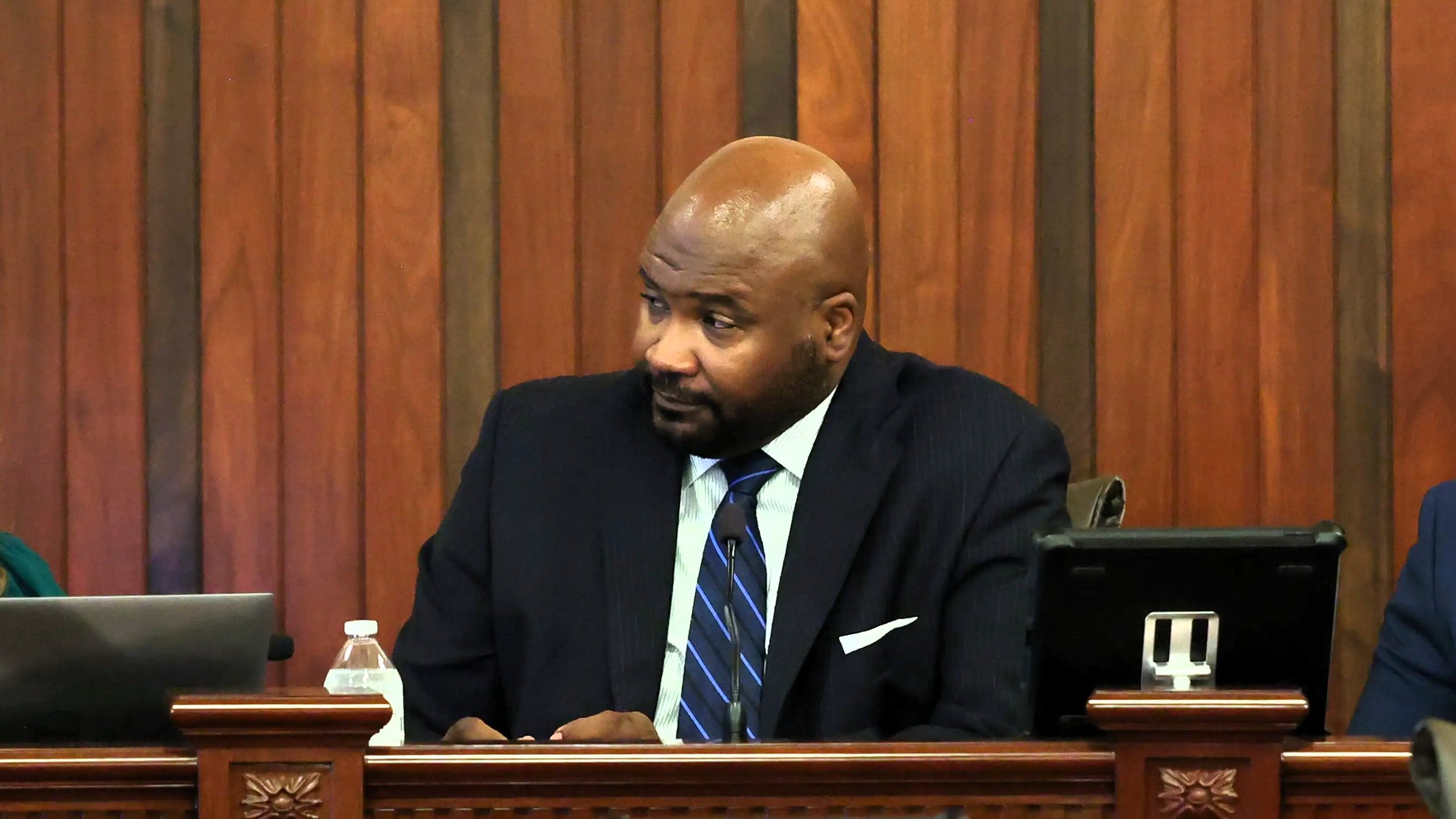
Sen. Elgie Sims (D-Chicago) answers questions about the state budget in a committee hearing at the Capitol Sunday. (Photo: Chicago Tribune)
Democrats in the General Assembly advanced a $56 billion spending plan early Monday that includes some $900 million dollars in tax increases and fund sweeps to close the budget hole for the FY2027 budget, which begins July 1.
Republicans harshly criticized the tax increases and fund sweeps in the budget, while Democrats say it fully funds pensions, schools, and other top priorities and protects the state from potential cuts from the Trump administration.
“It’s allowed us to be prepared for the grave reality we face today, the reality of continuing uncertainty, the reality of federal cuts, the reality of chaos coming from Washington,” said Sen. Elgie Sims (D-Chicago). The top Senate budget negotiator.
The plan includes a $200 million tax on social media companies that was originally proposed by Governor JB Pritzker in his budget proposal earlier this year. The budget also includes $300 million in additional revenue from increasing the threshold for the Net Operating Loss Deduction.
$150 million in higher-than-expected gasoline sales tax revenue will be diverted from transit to the General Revenue Fund in the new fiscal year.
“We ought to be suspending the sales tax on motor fuel right now, not diverting it to the General Revenue Fund, and not diverting it, oddly, to the exact same dollar amount that we got for illegal immigrants and welcoming centers,” Rose said.
The plan also shifts around $80 million in sales taxes from candy and soda away from capital construction programs and to the state’s general fund.
Taxes on digital advertising, cryptocurrency, and fantasy sports are all included in the budget, but not part of the expected revenue, because they are all likely to be challenged in court.
The budget bill increases K-12 funding by $350 million as required by the “Evidence Based Funding” formula adopted in 2017. Higher education funding increases by 1%. It also makes the full $11 billion pension payment and provides funding for 100 new correctional officers.
The budget also includes a 3% cost of living increase for lawmakers, which will bring their salary over $100,000 per year for the first time.
Governor Pritzker said Monday he will sign the bills.

